 I am back on the BBC! They liked my story about the “drastic” and “shocking” cuts to prison drug treatment at a time when even the Prisons Minister says the drugs situation in English prisons is “unacceptable” so much that it was headlining the news. Have a listen and let me know what you think.
Category: mental health
Making waves in Parliament with my addiction mental health journalism

My writing about addiction and mental health for national newspapers is having a major impact! A Cross party Parliamentary group of UK MPs is to meet on July 12th to discuss my latest Guardian investigation – massive funding cuts for drug and alcohol treatment which is leading to deaths. http://ow.ly/sCJ030czKgt
Another exclusive groundbreaking story was for the Times showing the levels of alcohol related brain damage among older people had gone up by more than 300% https://www.thetimes.co.uk/article/huge-rise-in-middle-aged-drinkers-with-brain-damage-n5zgcwzf5
And for the Sunday Times on the resignation of the Chief Executive of the Priory and extent of suicides at the UK’s largest private mental health provider. The Priory said the two were unconnected. https://www.thetimes.co.uk/article/deaths-spark-care-fears-at-prioryhospitals-jdtf38khp
I have also written about domestic violence and abuse for the Telegraph with harrowing case studies http://www.telegraph.co.uk/women/life/black-bruises-didnt-recognise-domestic-abuse-calls-reach-all/
Please send me exclusive story ideas about mental health and addiction that have not been covered before by national media. I am now working on stories for BBC Radio as well as the Guardian, The Sunday Times, The Times and the Telegraph
This return to professional journalism at 12 years clean is welcome after crashing out of my career as a reporter for the BBC and national newspapers because of my drug addiction and mental health problems in 2005.
Thank you for supporting my blog without which this return to professional journalism would never have happened.
Sign up for updates on this blog
 Follow me on Twitter
  Send me a friend request on Facebook
Widely published at last!

After crashing out of my career as a reporter for the BBC and national newspapers because of my drug addiction and mental health problems I am now, at 12 years clean, a professional journalist again! I have written reports about mental health and addiction for the Sunday Times https://www.thetimes.co.uk/article/deaths-spark-care-fears-at-prioryhospitals-jdtf38khp The Times https://www.thetimes.co.uk/article/huge-rise-in-middle-aged-drinkers-with-brain-damage-n5zgcwzf5 the Telegraph http://www.telegraph.co.uk/women/life/black-bruises-didnt-recognise-domestic-abuse-calls-reach-all/ I also have upcoming commissions for the Guardian and several ideas for the BBC!
Thank you for all your support for my blog.
Caroline.
Domestic abuse calls in UK reach all time high but experts hope technology can help
 “He was driving straight towards a lamppost; the kids were screaming. He was trying to kill us all.”
When 37-year-old Monica* first met her partner, she soon fell in love with his charm and presence. But 16 months down the line, things changed. He started punching her and hitting her with objects, leaving the former model “black with bruises. I could not actually recognise myself.”
http://www.telegraph.co.uk/women/life/black-bruises-didnt-recognise-domestic-abuse-calls-reach-all/
Sign up for updates on this blog
 Follow me on Twitter
  Send me a friend request on Facebook
Homeless charities and mothers criticise government for not raising duty on super strength cider in the Budget
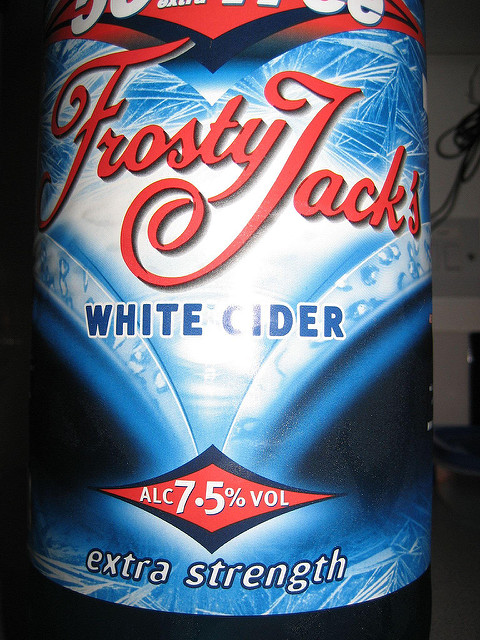
The CEOs of homelessness charities Shekinah and Thames Reach have strongly criticized the government for not raising duty on super strength white cider which they said is killing more homeless people than heroin and crack.
The CEO of Thames Reach Jeremy Swain said “the evidence showing that the drinks are killing people is beyond dispute and each month that goes past leads to further deaths.” John Hamblin CEO of Shekinah Charity said “we see daily examples of people just killing themselves from consuming very large quantities of ridiculously cheap super strength cider”. Both said they were “very disappointed” by the decision.
The decision has also been condemned by Joanne Good, the mother of 16 year old Megan Craig Wilkinson who died after drinking 1.5 litres of super strength cider Frosty Jack. Joanne Good has lobbied MPs to ban or raise duty on what she called “pocket money” cider. Professor Sir Ian Gilmore Chair of the Alcohol Health Alliance said super strength white cider is almost exclusively drunk by children, street drinkers and the homeless because of its sweet taste and low price.
It is possible to buy a 3 litre bottle of super strength cider which contains as much alcohol as 22 shots of vodka for less than £3.50 or $4. Cider which can be up to 9% alcohol has the lowest duty of any alcohol product in the UK at only 5p per unit less than a third of the rate for beers at the same strength. Conservative MP Fiona Bruce wrote in the Huffington Post that the Chancellor needed “to call time on the ability to buy a can of cider for cheaper than a bottle of water.”
Joanne Good told The Mirror: “I felt disappointed that there’s no immediate rise on the cheap cider that is causing so many problems in society. Hopefully this would put children off from drinking it and maybe a life could be saved. If it was up to me, I would like to see ciders like these removed from sale.”
Both Joanne Good, Thames Reach and the Alcohol Health Alliance welcomed the fact that the government would be consulting on introducing a higher rate of duty on cider of 5.5 to 7.5% volume. But John Hamblin CEO of Shekinah Charity said “they have been consulting for years there’s been lots of evidence presented to government about the harms of super strength cider but there just seems to be a reluctance in government to tax people’s leisure. But you and I don’t go round to meals at friend’s houses on Saturday night when someone brings out a bottle of White lightening. But there’s somehow a perception that higher taxes on super strength cider and lager will impact on Joe Public that’s not the case.” Conservative MP Fiona Bruce agreed saying “80% of cider sales would be completely unaffected by such a move.”
Cider has had an artificially low rate of duty since the Second World War to encourage people to plant apple trees. But John Hamblin said “We are not targeting people drinking craft ciders which are made from apples this super strength cider should not even be called cider. It’s an insult to call it cider as its never seen an apple in its life it’s just a concoction of chemicals.”
When Joanne Good’s MP Labour’s Mary Glindon brought up the issue of super strength cider at Prime Minister’s question time Theresa May said the government had already dealt with it. “We have taken action through the duty system so these high-strength ciders and beers are taxed more than equivalent lower strength products.We have also, of course, taken action on the very cheap alcohol by banning sales below duty plus VAT.”
But Alcohol Research UK director of research Dr James Nicholls said “The price per unit for strong ciders is considerably lower than beer at the same strength. There is a lot of evidence it is drink by people with serious alcohol problems.”
Professor Sir Ian Gilmore, Chair of the Alcohol Health Alliance, said: the government needed to “move the tax system towards a more sensible scheme where the stronger alcohol is, the more highly it is taxed. By taxing these drinks more strongly, the government will also encourage producers to lower the alcohol content in the drinks.”
John Hamblin of Shekinah said “people won’t stop drinking because you put the price up we are working with very vulnerable complex people when you increase the price they come off the super strength lager and cider and switch to lower strength say 4%. We not only see a rapid increase in their health but it makes it far easier for us to engage with people.”
The managing director of Aston Manor, the firm that makes Frosty Jack’s, was, perhaps unsurprisingly, very unhappy with the government’s consultation on the issue.
“We are very surprised that in the detail of the Budget Statement there is mention of a plan to consult on a new duty rate ‘to target white cider’,” Gordon Johncox told the Mirror.
“We often point to the inaccurate mythology that exists around white cider and we are disappointed that without evidence this announcement has been made. We will participate fully in the consultation process and provide evidence that dispels the myths that exist”
But MP Fiona Bruce said “opinion polling for the Alcohol Health Alliance indicates 66% of the public support higher taxes on white cider. Perhaps most importantly, Public Health England’s recent report clearly states that tackling affordability would be the best way to reduce alcohol harm. Market leader Frosty Jack’s is consistently ranked among the top brands consumed by underage dependent drinkers. .A quarter of patients in alcohol treatment services drink white ciders, and of these nearly half drink them exclusively.”
She added “such measures have worked in the past: consumption of super-strength beer fell by a quarter in response to the creation of a higher rate duty band in 2011.”
Sign up for updates on this blog
Follow me on Twitter Send me a friend request on Facebook
Almost 400% rise in alcohol related brain damage in older UK adults in 10 years
 The number of over-50s admitted to hospital for brain damage caused by the amount of alcohol they drink has more than trebled in little over a decade. There were 3,627 admissions of over-50s with alcohol-related brain damage in 2015, compared with 994 in 2002, but experts said that the condition could be twice as prevalent because it was poorly diagnosed. Read my article in the Times newspaper.
https://www.thetimes.co.uk/article/huge-rise-in-middle-aged-drinkers-with-brain-damage-n5zgcwzf5
Sign up for updates on this blog
Follow me on Twitter Send me a friend request on Facebook
Revealing the full extent of suicides at Britain’s largest private mental health provider
Coroners have issued five formal notices over the past five years highlighting care failures after deaths of patients in the care of the Priory Group’s hospitals. Among the recurring problems highlighted in the coroners’ “prevention of future death notices” are a failure adequately to monitor patients at risk of self-harm, failures in training and inadequate record keeping. They are the latest in a series of incidents that has raised concerns about the welfare of patients, both private and NHS, at Priory hospitals. Read my article in the Sunday Times.
https://www.thetimes.co.uk/article/deaths-spark-care-fears-at-prioryhospitals-jdtf38khp
Sign up for updates on this blog
Follow me on Twitter Send me a friend request on Facebook
Where is the £10 billion extra going that the UK government says it’s spending on mental health?

Not on mental health according to leading charities Sane and Mind. They say this money is partly being spent by NHS Clinical Commissioning Groups to plug gaps in their funding for physical health problems. They say less money is actually feeding through to front line mental health services, dealing with people in crisis and suicidal than before. The Chief Executive of SANE Majorie Wallace says the number of people calling their helplines is higher than at any point during the helplines 20 year history as people cannot access crisis care
The government is keen to stress it’s spending more on mental health. The Health Secretary Jeremy Hunt says its spending £10 billion more and 1 billion more than 2 years ago. The £11.7 billion budget for mental health in 2016/17 is double what it was 5 years ago. But the government has refused to ring fence the money it allocates to mental health which means charities say the money is being diverted. Two thirds of mental health trusts said recently that their budgets have been cut and 57% of Clinical Commissioning Groups who responded to an Freedom of Information request in 2016 said they planned to reduce the proportion they spent on mental health.
Extra investment has been promised. “The NHS has committed to investing an additional £1bn in mental health services by the end of 2020-21.” said the Chief Executive of Mind, Paul Farmer. “This is welcome but we need to make sure that it materialises and reaches the front line. The same goes for all the other pots of money announced over the last couple of years,” he said.
Although the government has put money into non urgent services such as the talking therapy provider IAPT, SANE says that crisis care had been cut. Its Chief Executive Marjorie Wallace SANE said that 4000 adult psychiatric beds and 1500 Child and Adolescent psychiatric beds had closed in the past few years. The Chief Executive of Mind agreed that crisis care had been cut saying “NHS mental health services have been subjected to significant cuts over recent years, more so than the acute sector, at a time of rising demand. This has left some parts of the system struggling to cope, which of course has a huge impact on patient care.”
Suicide rates of people being treated by Community mental health teams have doubled in recent years which SANE say is a sign that community care is massively overstretched and not working.
Labour say spending on mental health fell by 8% in real terms during the coalition government and a report in January 2015 said spending on Child and Adolescent Mental Health Services had decreased by 6%. The government says this has now been corrected and that has invested £7 million more in CAMHS psychiatric beds in 2015/2016.
Due to the shortage of inpatient CAMHS beds 47% of CAMHS patients are now treated in private hospitals often many miles from their home. The average cost of a child staying in a private psychiatric hospital is 800 a night. Theresa May has pledged to end out of area placement for CAMHS patients by 2021. But SANE Chief Executive Marjorie Wallace cast doubt on whether this would happen as no significant new funding had been announced.
The Prime Minister’s speech earlier this week promised a raft of initiatives to help children and adults with mental health problems. It said that teachers in schools would receive mental health “first aid training” to spot signs of mental illness and that links between schools and local NHS mental health services would be strengthened. It also promised extra support for people with mental health problems in the workplace and £15 million extra for “crisis cafes” and clinics. All this was welcomed by SANE and MIND but MIND said “our job is to ensure that the commitment is met. We need to see sustained leadership to make sure services and support improve for all of us with mental health problems. Having been neglected for decades, we need to see it made a priority for decades to come”
1st Christmas with my family for 12 years!
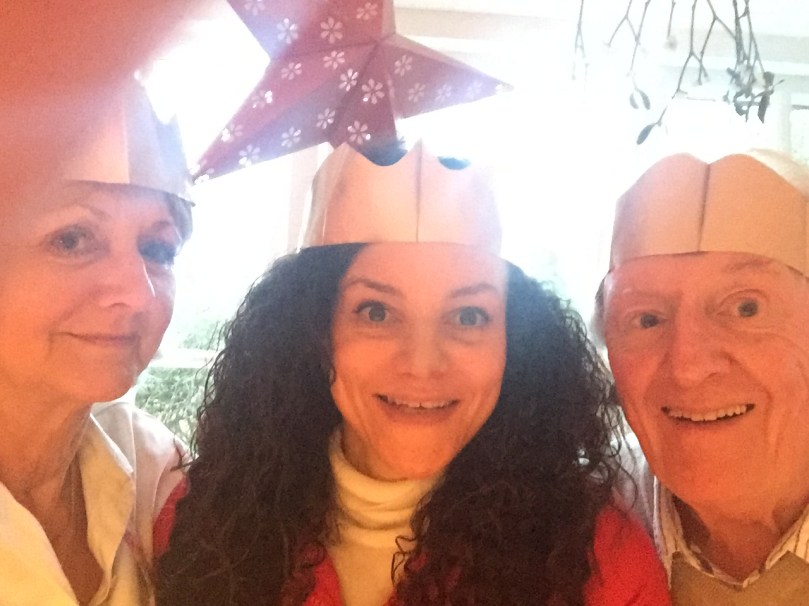
Today for the first time in 12 years and for the first time in my entire recovery I spent Christmas with my family. Just before I got into recovery I spent Christmas Day alone with a bag of cocaine and litre of vodka. That rock bottom was the start of my recovery journey. Every Christmas since then I have spent away from my family. Before I went into family therapy with my father the relationship was too strained for me to contemplate spending Christmas with him. But I hope there will be other Christmases in future. It was the first time I had been to my father’s house since he bought it almost 10 years ago. After practically bursting into tears 5 minutes after I arrived as I was so upset it turned into a fabulous day. Unfortunately there will be no Christmases with my mother who died 10 years ago this year. But despite my issues with her she has given me the freedom to write which is amazing. I dream about her all the time. RIP
Top publisher says my blog is “funny” has “an engaging voice” and “lots of great material”
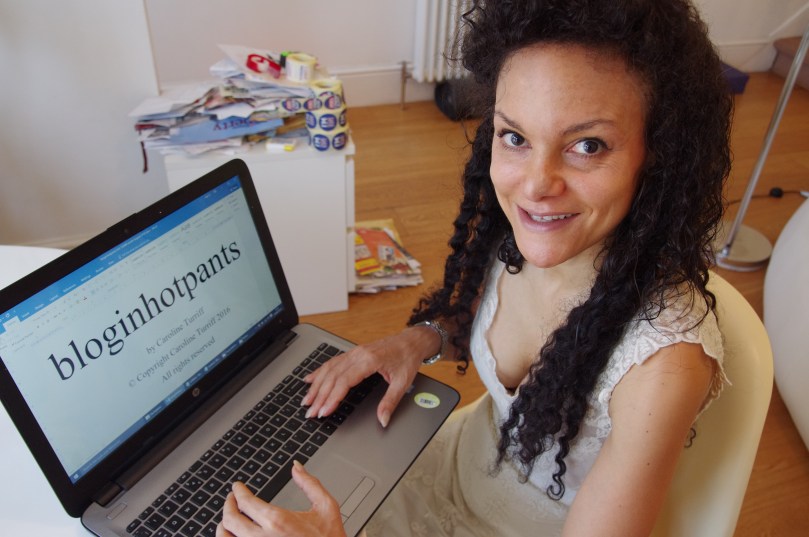
Sarah Savitt, deputy head of feminist publisher Virago and former publishing director at Headline, one of the most successful commercial imprints in the UK, said my blog was “definitely enjoyable to read” as it was “funny, fast paced and interesting.” She recommended making changes to the blog, which I’ve now turned into a memoir, so that is has greater “focus” and “structure.” She gave me three pages of feedback on the memoir and recommended I read nine successful recent memoirs and analyse them technically to see how they tell their story.
I am now doing this starting with best sellers “Mad Girl”by Bryony Gordon which also talks about OCD, bulimia, cocaine addiction and journalism and “Reasons to Stay Alive” by Matt Haig which deals with depression and anxiety. She said there were “many themes” in my memoir “from class and privilege and race (people constantly asking where you’re from) to mental health to your mother’s abuse to drugs and sex.” She said I need to “choose one or two things to focus on and weight the book towards those themes.” She said that it is difficult for people who are not famous to get memoirs published but that those that are published and “break out” and become successful have this particular focus. After I’ve read the 9 memoirs I am going to start a re-write of mine.
I’m also starting a freelance journalism course in October to try to resurrect my freelance journalism career and raise the profile of my writing. I may do a course on memoir as well. The agent didn’t work out but given that the publisher said the blog needed a major rewrite to make it commercially viable this may be why.
The search for Mr Right continues of course unsuccessfully. I’ve been on a few dates but haven’t fancied them. I’ve signed up to various Conservative party events (I grew scales and a tail before the last General Election and was, alarmingly, diagnosed as a Tory) to try to network and meet an ethnic Tory Mr Right. I did go to an event on Wednesday and met an attractive ethnic Tory but he was only 21.
The big change on the home front is that as I am now almost completely recovered from the OCD and broken my ban on having anyone to stay in my house over the summer I am going to get a lodger. This will bring in useful extra income as well as give me someone to discuss world current affairs with. Of course due to my bisexual tendencies the search for a lodger has been fraught with problems. I was worried about fancying the prospective male lodgers who came along but it was actually a gorgeous Iranian woman with arresting green eyes who made me swoon. Obviously I couldn’t say “you’re too sexy to move in” so I just told her an elephant was moving in instead.
I now have the assistant to a Member of Parliament moving in who is very bright and interested in politics and crucially, given my previous campaigning for Britain Stronger in Europe, pro-European. All the lodgers were quizzed on their Brexit views and any prospective pro-Brexit people were executed.
In preparation for the lodger I am de-cluttering my house going through every cupboard and throwing out junk and the fifty tonnes of paperwork I’ve accumulated since I started writing my first novel. Before the viewings by the lodgers every inch of floor space was covered in reams of paper from various re-writes of the novel and the blog and a rhino that I’d brought back from Sudan was watching my telly. I’ve now thrown out a hundred bags of rubbish which are sitting in my front garden rather optimistically waiting for the bin men to take them away. I’ve got so much excess paper I could actually start a re-cycling plant in my home. The rhino is claiming asylum due to the civil war in Sudan so is now living on my roof terrace.
As part of my new political activities I went to the Conservative Women’s Organisation summer party on Thursday. I was worried that everyone might be white but in fact half of them were ethnic minorities showing that I am not the only ethnic minority in London who votes Conservative. Though curiously when I see black supporters of Donald Trump paraded in front of the cameras at his speeches I think “you are a traitor to your race.” I can see that some black people in dying former industrial towns in the United States may warm to the Trump message. But in the UK it is aspirational ethnic minorities who vote Conservative. Now I look Jamaican with my natural hair obviously everyone thinks I’m a Labour party supporter.
After coming out on Facebook as a Tory earlier this year I will be revealing myself on the national media by attending the Conservative Party Conference in October. This is not just an attempt to network and further my political career but also crucially to find a husband. But my chat up lines will not be the bog standard “do you come here often” but the rather more focused “what do you think about Brexit?”
Sign up for updates on this blog
Follow me on Twitter Send me a friend request on Facebook
Next blog post – Finding a husband at the Conservative Party Conference (or should I be looking for a career?)
 Mental Health Headlines